
Strengths and Weaknesses Interview Answers: Choose Honest, Relevant Examples
Choose credible strengths and weaknesses for job interviews, structure each answer with evidence, and avoid fake or risky examples.

Good strengths and weaknesses interview answers demonstrate self-awareness. For a strength, name a role-relevant capability and prove it. For a weakness, name a real but manageable limitation, explain the action you are taking, and show evidence of progress.
How to choose a strength
Select a strength that is important to the target role, visible in your past work, and specific enough to demonstrate. “Communication” is broad; “explaining technical risks to non-technical stakeholders” is testable.
Use this structure:
My strength is [specific capability]. In [brief context], I used it to [action], which led to [verified result]. I would apply it here when [relevant responsibility].
Example: software engineer
One strength is systematic debugging. During an internship release, I reproduced an intermittent failure, added targeted logging, and narrowed it to a race condition instead of changing several components at once. That approach helped the team validate the fix safely, and it is how I would handle production issues in this role.
Example: customer success
My strength is translating a frustrated customer’s message into a clear action plan. In my current role, I summarize the issue, confirm priority, and coordinate the owner before promising a timeline. That has helped me maintain trust during escalations.
How to choose a weakness
A useful weakness is honest, not a disguised compliment, not the role’s central requirement, and already being addressed. Use the GROW sequence:
- Gap: Name the limitation directly.
- Risk: Explain when it matters.
- Ownership: Describe the action you take.
- Win: Show a recent sign of improvement.
Example: delegating
Earlier, I held on to tasks too long because I wanted the output to be consistent. That created a capacity risk during busy periods. I now define the expected result and checkpoint before assigning work, and my last project had clearer ownership with fewer late handoffs.
Example: public speaking
Large-group presentations used to make me rush through important context. I began rehearsing with a timer and volunteering for short internal demos. I am still improving, but I now pause for questions and receive clearer feedback on my presentations.
Weaknesses to avoid
Do not choose a weakness that makes you unable to perform an essential duty. A safety engineer should not say they ignore procedures; an accountant should not say accuracy is a problem. Avoid fake weaknesses such as “I care too much” unless you can identify a genuine behavior and improvement plan.
Never disclose protected medical or deeply personal information merely because the question feels demanding. Keep the answer professional.
Prepare evidence, not a script
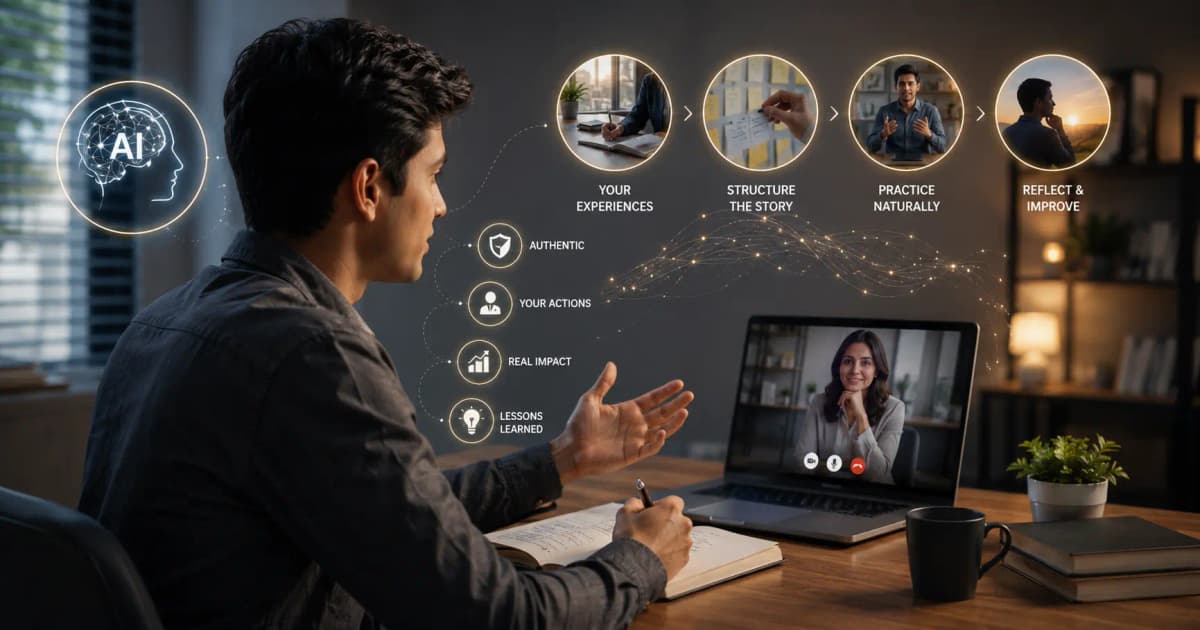
Write three possible strengths and two possible weaknesses. Match them against the job description, then rehearse one answer for each. Ask a friend whether the example proves the claim.
Use InterviewGPT custom instructions to keep the answer grounded:
Return one strength with a verified example and one real development area with a concrete improvement action. Use only my resume and notes. Keep each answer under 60 seconds.
Review the transcript for exaggerated adjectives, missing actions, and results you cannot verify.
Common mistakes
- Listing five strengths without evidence
- Giving a weakness that is actually a boast
- Claiming the weakness is completely solved
- Choosing a central job requirement as the weakness
- Sounding defensive or blaming a previous team
- Repeating a generated answer that does not fit your history
Follow-up questions to expect
An interviewer may ask when the strength failed, what feedback you received, or how you measure progress. Prepare one counterexample and one lesson. This makes the answer more credible than pretending the trait is universal.
Bottom line
Strengths require proof; weaknesses require ownership and progress. The best pair is relevant, specific, and easy to defend with real experience.
Download InterviewGPT and rehearse concise, resume-grounded versions in your normal speaking style.
Build stronger evidence
Turn each example into a concise story with the STAR method interview guide, then practice follow-ups using the behavioral and HR interview workflow.