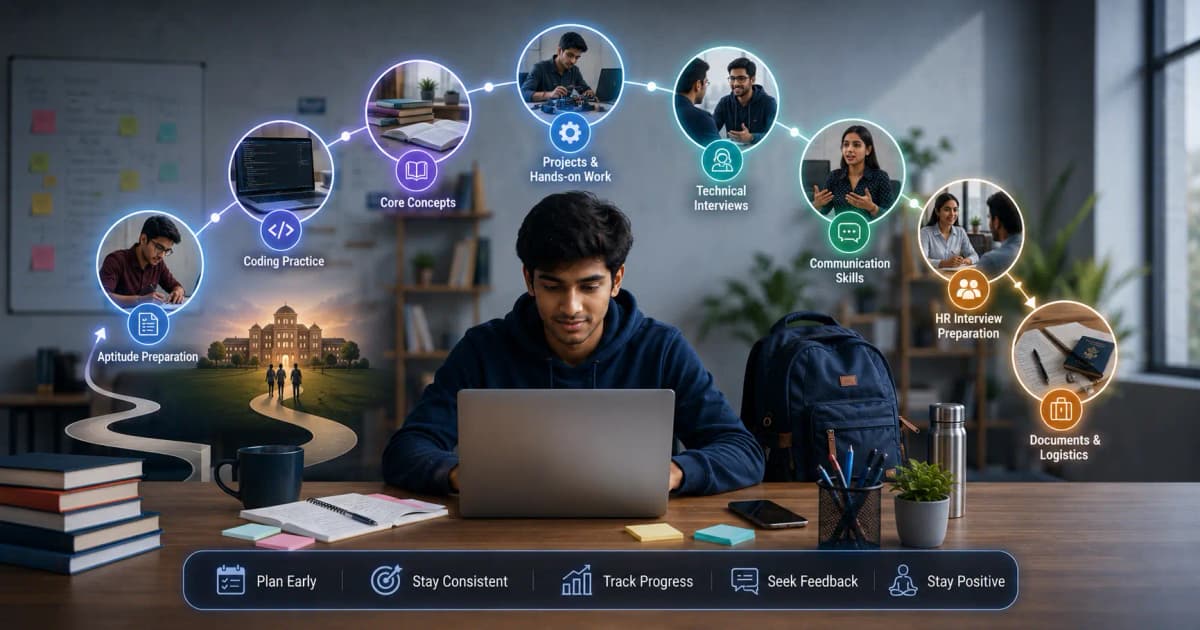

AI Interview Assistants for Freshers: Use Them Naturally
Learn how freshers can use AI for interview practice and live structure without inventing experience, sounding scripted or ignoring fundamentals.
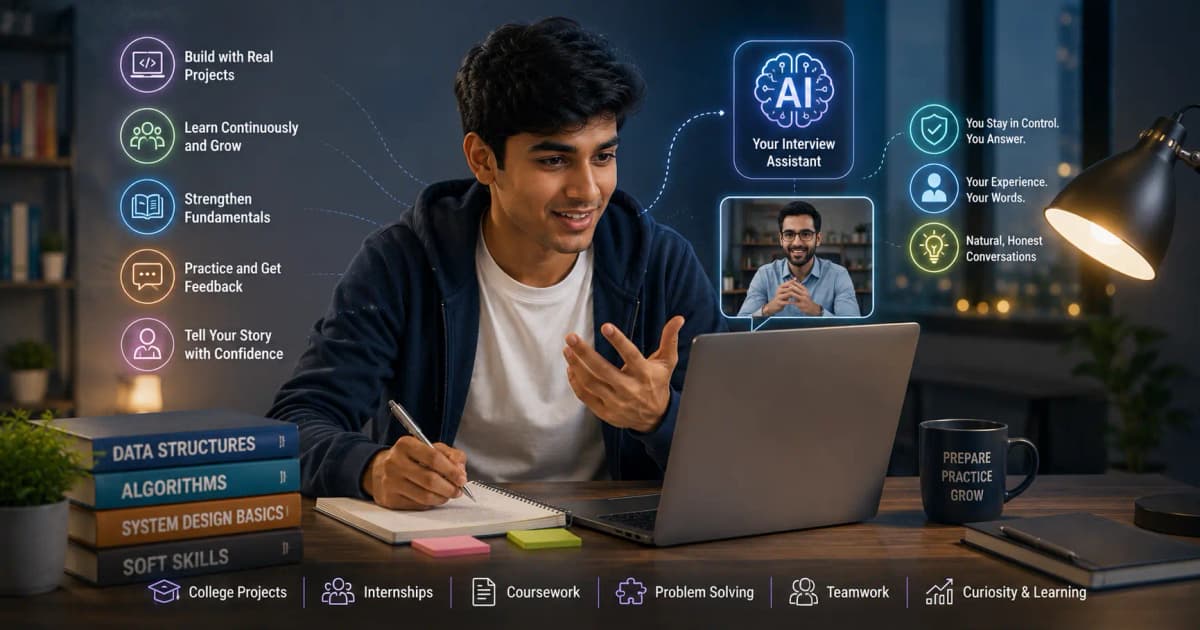
Freshers do not need to pretend they have five years of experience. Strong entry-level answers use evidence from projects, internships, coursework, clubs, hackathons, volunteering, part-time work, and self-directed learning. AI is useful for finding that evidence and structuring it—but harmful when it invents achievements or produces a script you cannot defend.
Build an evidence bank first
Create six short records:
- A project you completed.
- A difficult bug or problem.
- A disagreement or teamwork challenge.
- A time you learned quickly.
- A mistake and what changed.
- A moment you took initiative.
For each, write context, your personal action, result, and learning. Add links or numbers only when they are real.
Use AI before the interview
Ask the assistant to:
- Match job requirements to your evidence bank.
- Generate follow-ups an interviewer might ask.
- Identify vague claims and missing proof.
- Shorten your introduction to 60–90 seconds.
- Run a role-specific mock interview.
- Explain technical fundamentals, then quiz you without showing the answer.
Use this safety instruction: “Never invent experience. Mark missing evidence and ask me a question.”
Use live suggestions as cues
During an allowed session, look for a structure and two or three keywords—not a speech. Start with your own direct answer, add evidence, and respond to the interviewer's reaction. Reading a polished paragraph often removes eye contact and sounds less credible than a simple authentic response.
A fresher answer pattern
For “Why should we hire you?” use:
role match → evidence → learning speed → contribution
Example:
“This role needs Java fundamentals and reliable API work. In my final project I built and tested a Spring Boot service, owned error handling, and documented the API for three teammates. I am early in my career, but I learn quickly and can contribute with disciplined implementation and clear communication.”
Replace every detail with your own facts.
Technical interviews
AI cannot replace DSA, CS fundamentals, or project understanding. Practice explaining your own code, complexity, database choices, deployment, testing, and trade-offs. If a tool suggests code, ask why each step exists and change a constraint. Read the coding/system-design guide.
Where InterviewGPT fits
InterviewGPT offers live transcription, answers based on your resume and target role, screen analysis for coding problems, a phone companion and a free Invisible Browser on Windows. Freshers can begin with the free 10-minute sessions (up to 3 a day), test five questions, and only buy access if the workflow is genuinely useful.
Rules and privacy
Follow campus/employer rules, do not use assistance in a prohibited assessment, and never upload confidential test material. Use sanitized documents and review privacy and terms.
Seven-day practice rhythm
- Day 1: evidence bank and job analysis.
- Day 2: introduction and resume walkthrough.
- Day 3: project deep dive.
- Day 4: behavioral stories.
- Day 5: technical fundamentals.
- Day 6: two mock interviews and feedback.
- Day 7: light review, setup test, sleep.
For Indian recruitment cycles, continue with the campus placement guide or download InterviewGPT.